Primary Water Requirements for the Food & Beverage Industry
The food industry has extremely strict water quality requirements, typically necessitating
Purified Water grade (with conductivity generally below 10μS/cm).
Sensory Standards: Water must excel in color, odor, and taste—being colorless, odorless, and clear—to ensure it does not interfere with the original flavor of the beverage or food.
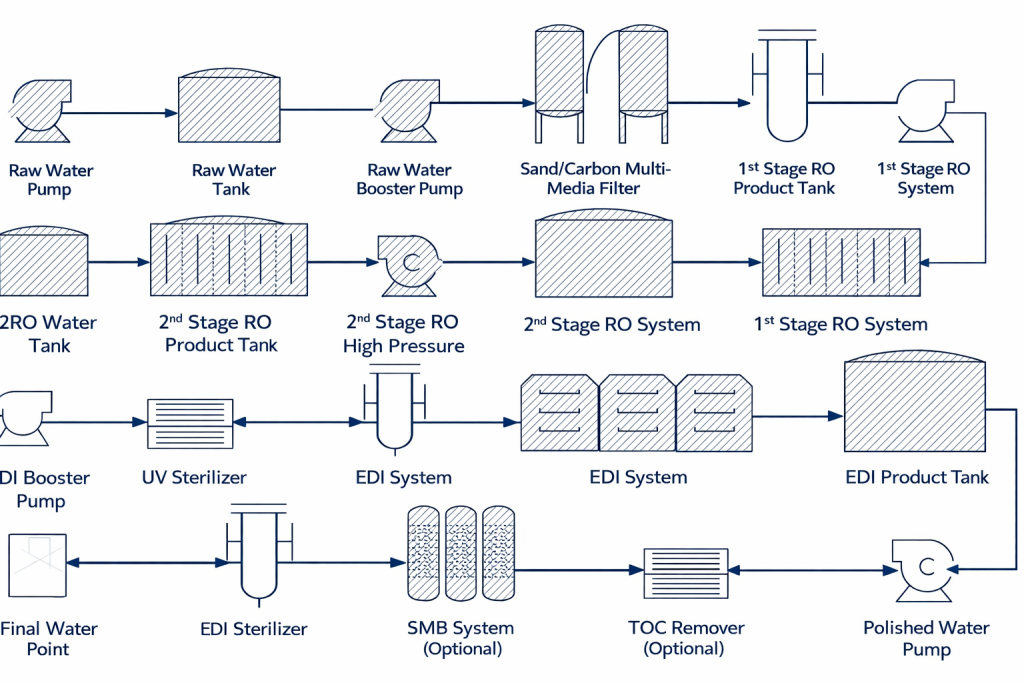
Microbiological Control: Water must strictly comply with hygiene standards and be free from pathogenic bacteria. Ultrafiltration (UF) or Reverse Osmosis (RO), combined with UV or Ozone disinfection, is typically required to eliminate bacteria and viruses.
Chemical Purity:
Hardness Control: Low-hardness water prevents precipitation in beverages (such as white flocculent matter in carbonated drinks).
Dechlorination: Residual chlorine must be completely removed, as chlorine can react with food ingredients to produce off-flavors or potentially harmful substances.
Regulatory Compliance: Production water must meet mandatory national standards, such as GB 17324-2003 (Hygienic Standard for Bottled Purified Water for Drinking) or GB 5749-2006 (Standards for Drinking Water Quality).Key Characteristics of Water Usage in the Food Industry
Compared to general industrial water, water used in the Food & Beverage sector features several distinct characteristics:
High Safety & Mandatory QS/SC Certification: The state implements a food hygiene and safety licensing system (QS/SC certification). It stipulates that process water must undergo advanced purification, with purified water systems being the standard choice.
Flavor Neutrality: Purified water acts as a “neutral solvent”. It requires the water to be free of interfering minerals to ensure that beverages (like Coca-Cola) produced globally maintain a perfectly consistent taste across different regions.
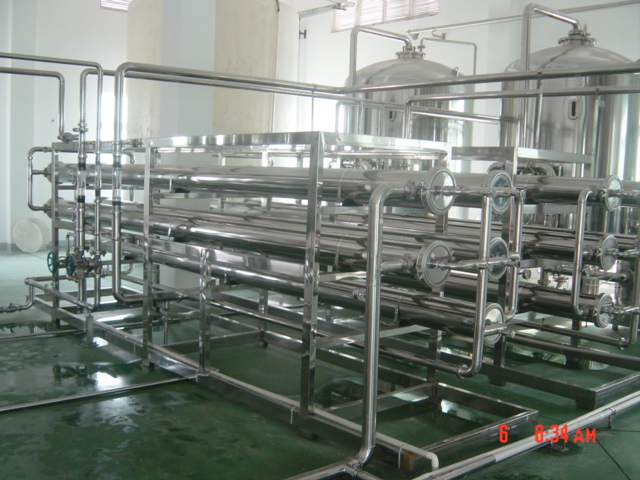
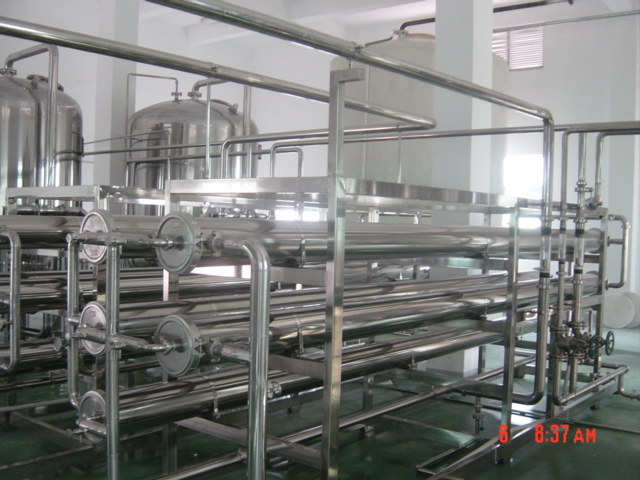
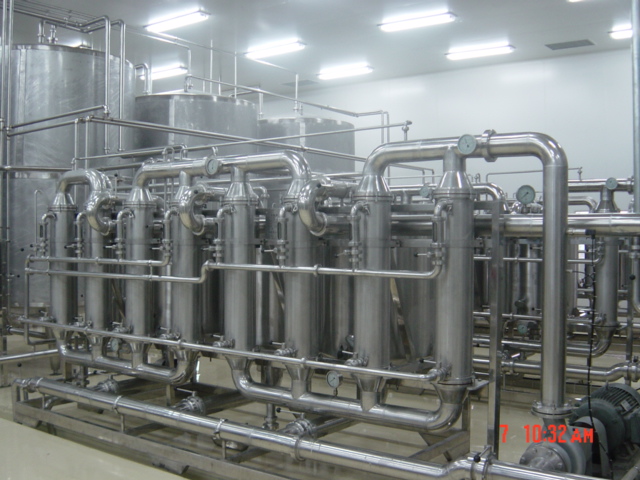
High-Grade Equipment Material: Since water comes into direct contact with food, the entire treatment system (piping, storage tanks) typically utilizes
Food-Grade Stainless Steel (SS316L) with mirror polishing to prevent secondary contamination and biofilm growth.
Dynamic Water Quality Monitoring: The industry generally requires online monitoring of conductivity, pH levels, and residual chlorine to ensure the water quality standards remain consistent for every production batch.
The Challenge: Strict Compliance & Health Standards
With increasing global pollution and rising health consciousness, municipal or underground water no longer meets the rigorous needs of modern food production.
- Regulatory Barriers: Mandatory QS certification requires specialized water treatment for both process and product water.
- Contamination Risks: Standard water sources fail to meet the GB 17324-2003 hygiene standards for bottled drinking water.
- Quality Consistency: Variations in raw water quality can alter the taste, shelf-life, and safety of the final food and beverage products.
The Conclusion
"In an era of comprehensive oversight—from plant setup to finished product testing—high-purity water is no longer an option, but a core necessity for food safety and market access."
Our Solution: High-Standard Food-Grade Pure Water Systems
Our integrated purification systems ensure that output water consistently maintains Conductivity < 10μS/cm, fully complying with national safety standards.
Compliance & Certifications:
- GB 17324-2003: Hygienic Standard for Bottled Drinking Pure Water
- GB 5749-2006: Standards for Drinking Water Quality
- CJ 94-1999: Water Quality Standards for Fine Drinking Water
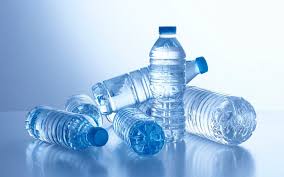
- Bottled Water
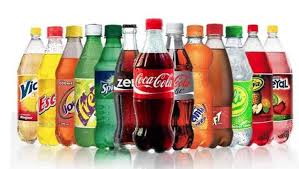
- Carbonated Beverage
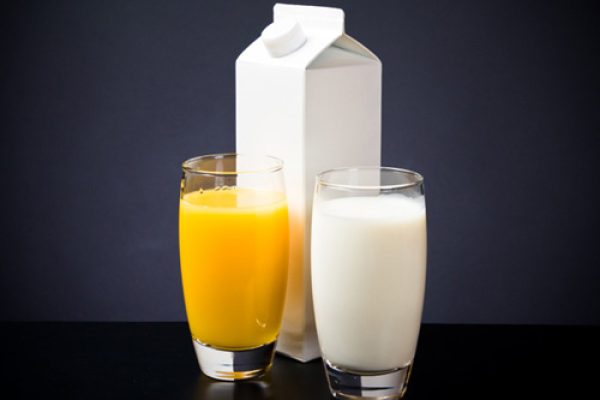
- Dairy / Juice
The Challenge: Balancing Purity with Taste
Bottled water production requires more than just filtration; it demands absolute biological safety and consistent mineral profiles.
- Microbial Risks: Preventing Pseudomonas aeruginosa and other pathogens is critical for market shelf-life.
- Standard Compliance: Must strictly adhere to GB 17324-2003 hygiene standards for bottled water.
- Taste Profile: Excessive demineralization can lead to a flat taste, requiring precise ion balance.
The Conclusion
“High-quality bottled water is the result of a multi-stage barrier system that guarantees both absolute safety and refreshing purity.”
Our Solution: Multi-Stage Pure Water System
Our system maintains Conductivity < 10μS/cm using dual-stage RO and final ozone/UV sterilization.The Challenge: Protecting Flavor & Carbonation Stability
In carbonated soft drinks, water chemistry directly affects CO2 solubility and flavor concentrate stability.
- Alkalinity Control: High alkalinity neutralizes beverage acids, altering the intended flavor profile.
- Residual Chlorine: Even trace amounts of chlorine can react with syrups to create “off” flavors.
- Organic Matter: Dissolved organics can cause “neck rings” or unstable carbonation (foaming) during filling.
The Conclusion
“For the beverage industry, water is the foundation of flavor. Removing interfering ions is key to a consistent global taste.”
Our Solution: De-chlorination & Softening Precision
Integrated Activated Carbon Towers and High-Flux RO systems ensure zero chlorine and low alkalinity for perfect carbonation.The Challenge: Ultra-High Sanitary Requirements
Dairy and juice processing involve high-nutrient environments where bacterial growth is an ever-present threat.
- Biofilm Prevention: Standard piping can harbor biofilms that contaminate entire production batches.
- Heat Resistance: Systems must often interface with hot-fill processes or pasteurization loops.
- Dead-Leg Elimination: Any stagnant water in the system becomes a breeding ground for bacteria.
The Conclusion
“When dealing with dairy and fruit acids, sanitary design and material integrity are the only ways to guarantee a safe product.”
Our Solution: Full Stainless Steel Sanitary Systems
Engineered with SS316L mirror-polished piping and automatic heat-sanitization modules to meet global food safety audits.