Description
IX ALITE HPR1100 NA Strong Acid Cation Exchange Resin | High‑Performance Demineralization Resin
Product Overview
IX ALITE HPR1100 NA (originally DOWEX™ MARATHON™ C) is a uniform particle, high‑performance strong acid cation exchange resin engineered specifically for industrial demineralization and high‑purity water treatment. Designed to deliver faster kinetics, higher capacity, and enhanced physical stability, it is the ideal choice for applications requiring efficient regeneration, lower operating costs, and reliable long‑term performance in demanding water conditions.
Key Features
• Uniform Particle Size (UPS) Technology – Fine, consistently sized beads provide faster ion‑exchange kinetics compared to conventional resins, enabling higher flow rates and more efficient regeneration.
• Higher Operating Capacity – Achieves greater exchange capacity per unit volume, extending service cycles and reducing regeneration frequency.
• Improved Regeneration Efficiency – Requires less acid and water during regeneration, lowering chemical consumption and wastewater discharge.
• Enhanced Physical Stability – Exceptional resistance to osmotic shock, compression, and abrasion, ensuring longer resin life even under cyclic operating conditions.
• Low Leachable Content – Minimal organic and ionic leachables help maintain high‑purity effluent quality, suitable for sensitive downstream processes.
Technical Specifications
|
Parameter
|
Specification
|
|---|---|
|
Resin Type
|
Strong Acid Cation Exchange Resin
|
|
Original Model
|
DOWEX™ MARATHON™ C
|
|
Ionic Form
|
Na⁺ (as shipped)
|
|
Matrix Structure
|
Styrene‑DVB Gel
|
|
Functional Group
|
Sulfonic Acid (–SO₃H)
|
|
Particle Size Range
|
0.60 – 0.75 mm
|
|
Uniformity Coefficient
|
≤ 1.2
|
|
Total Exchange Capacity
|
≥ 2.0 eq/L (min.)
|
|
Moisture Content
|
50 – 60%
|
|
Maximum Operating Temperature
|
120°C (Na⁺ form)
|
|
Reversible Swelling (Na⁺ → H⁺)
|
Approx. 8%
|
Typical Applications
• Industrial Demineralization – Primary cation exchanger in two‑bed or mixed‑bed demineralization systems.
• Boiler Feedwater Treatment – Softening and dealkalization for medium‑ to high‑pressure boilers.
• Condensate Polishing – Removal of cationic contaminants in power plant condensate systems.
• Process Water Purification – Pre‑treatment for ultrapure water, electronics, pharmaceuticals, and food & beverage production.
• Chemical Processing – Catalyst recovery, metal removal, and acid purification.
System Design & Operating Guidelines
-
Bed Design – Recommended bed depth ≥ 800 mm for optimal performance.
-
Service Flow Rate – 10 – 40 BV/h, depending on water quality and system configuration.
-
Regeneration – Use HCl (4‑6%) or H₂SO₄ (2‑4%) at a dose of 80‑150 g acid per liter of resin. Rinse thoroughly with low‑TDS water.
-
Backwash – Expand bed by 50‑70% before regeneration to remove trapped solids and classify beads.
-
Monitoring – Track pressure drop, effluent quality (conductivity, sodium leakage), and capacity to plan regeneration cycles.
Benefits Compared to Conventional Resins
→ Faster Kinetics – Smaller, uniform beads reduce diffusion resistance, speeding up ion exchange.
→ Higher Capacity – More efficient regeneration yields up to 15‑20% higher operating capacity.
→ Reduced Chemical & Water Use – Improved regeneration efficiency cuts acid consumption and rinse water demand.
→ Longer Lifespan – Superior physical stability reduces bead breakage and fines generation.
→ Lower Operating Costs – Combines higher throughput, less chemical use, and extended service life.
Packaging & Quality Assurance
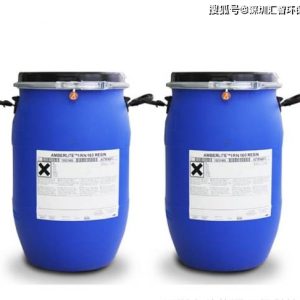
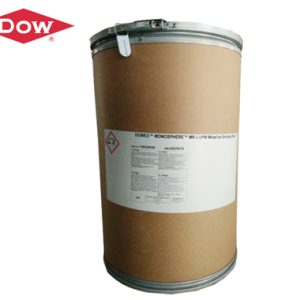
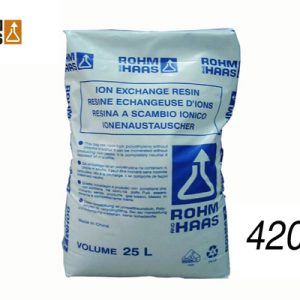
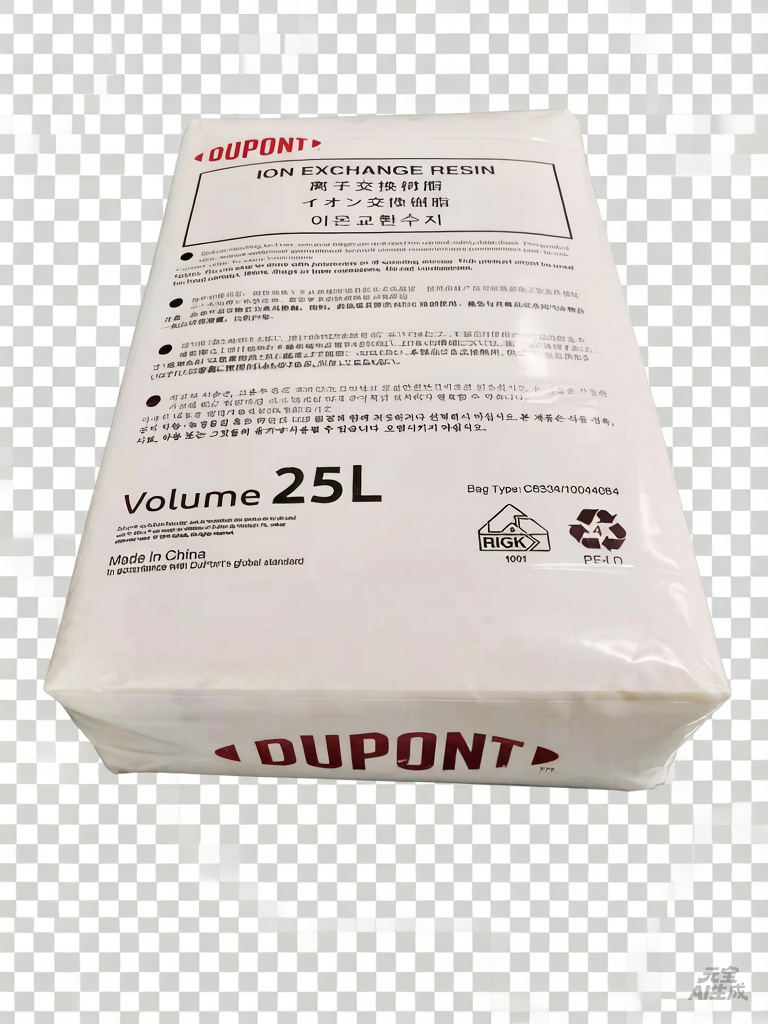
• Standard packaging: 25‑liter sealed, polyethylene‑lined fiber drum.
• Each batch is supplied with a Certificate of Analysis (CoA) confirming key performance parameters.
• Resin is shipped in the Na⁺ form, ready for pretreatment and service.
Why Choose IX ALITE HPR1100 NA?
For plant engineers and water treatment specialists seeking to maximize demineralization efficiency while minimizing operating expenses, IX ALITE HPR1100 NA offers a proven UPS‑based solution. Its combination of rapid kinetics, high capacity, and rugged durability ensures reliable performance in both new installations and retrofit upgrades—delivering purer water, lower chemical costs, and reduced wastewater footprint.
Important Note
This information is intended as a general guide. System design, resin volume calculation, and operating parameters must be verified based on actual feedwater analysis and process requirements. Always refer to the latest product data sheet and safety documentation before use.