The production of new materials, such as Lithium Iron Phosphate (LFP), Lithium Carbonate, and Graphene, requires Ultrapure Water (UPW) as the mixing solution. The terminal water quality must reach a resistivity of ≥15 MΩ·cm (at 25°C) or higher.
| Indicators | LFP (Lithium Iron Phosphate) | Lithium Carbonate | Graphene |
|---|---|---|---|
| Conductivity | ≤ 1 μS/cm | ≤ 0.5 μS/cm | ≤ 0.1 μS/cm |
| Water Grade | Purified Water | High-Purity Water | Ultrapure Water (UPW) |
| Critical Impurities | Fe²⁺, Cl⁻, SO₄²⁻ | Ca²⁺, Mg²⁺, Na⁺ | Metal Ions, Particles |
| TOC Requirement | Low / General | Moderate | Strict (< 50 ppb) |
| Particle Specs | General | Moderate | Strict (< 0.1 μm) |
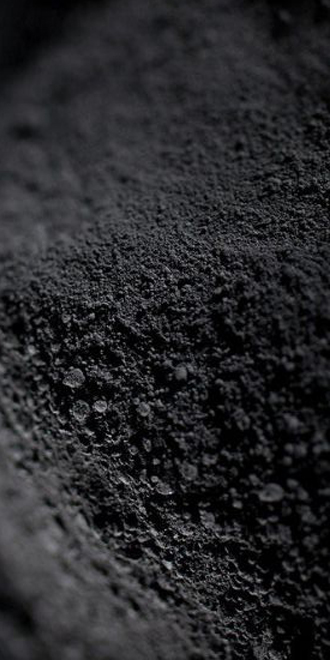
- Lithium iron phosphate
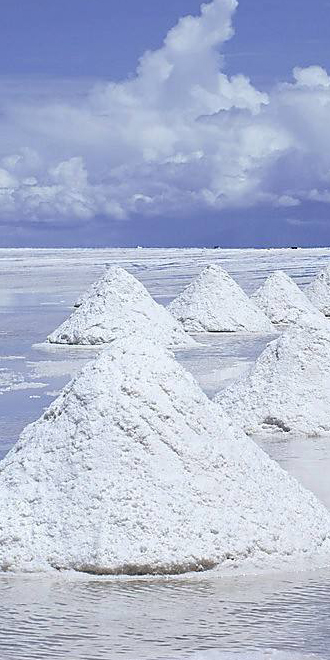
- Lithium carbonate
- Graphene
The Challenge: Contamination in Battery Chemistry
In the production of Lithium Iron Phosphate (LFP) and Lithium Carbonate, water is the primary solvent for mixing and synthesis. Even trace impurities can lead to catastrophic battery failure.
- Electrochemical Instability: Trace metal ions (like Fe, Cu, or Zn) in water can cause internal short circuits and significantly reduce battery cycle life.
- Lattice Defects: Silicates and organic carbon (TOC) interfere with the crystal growth of cathode materials, leading to lower energy density.
- Yield Loss: Inconsistent resistivity during the washing and slurry phases results in high batch rejection rates and wasted raw materials.
The Conclusion
“The evolution of EV battery technology demands extreme chemical precision. Achieving a consistent terminal water quality of ≥15 MΩ·cm (25℃) is no longer optional—it is the baseline for safety, high capacity, and market competitiveness.”
Our Solution: Advanced UPW Process for New Energy
Our specialized Ultrapure Water (UPW) systems utilize a multi-stage approach to meet the rigorous demands of LFP, Graphene, and Carbonate production.
- Double-Pass RO + EDI: Eliminates 99.9% of ionic contaminants to reach Resistivity ≥15-18 MΩ·cm.
- Total Organic Carbon (TOC) Reduction: Integrated UV oxidation modules ensure TOC levels remain below 10 ppb to prevent interference with chemical synthesis.
- Non-Leaching Materials: Use of high-purity PVDF or SS316L mirror-polished piping prevents secondary ionic leaching during transport.
Understood. Since your website is aimed at an international audience, maintaining a consistent, high-level English technical style is crucial. Here is the professional content for Lithium Carbonate manufacturing in English, following your established layout:
Lithium Carbonate (Li₂CO₃) Purification: Ultrapure Water Solutions
The Challenge: Impact of Impurities on Battery-Grade Lithium
During the extraction and refining of Lithium Carbonate from brine or ore, the purification process is exceptionally sensitive to water quality. Even microscopic ionic contamination can degrade product purity and compromise downstream battery performance.
- Ionic Contamination & Purity Loss: Metallic ions such as Sodium (Na), Magnesium (Mg), and Calcium (Ca) in the water can embed into the Lithium Carbonate crystal lattice, making it impossible to reach the “Battery-Grade” standard of 99.5% purity.
- Washing Process Inefficiency: If the conductivity of the washing water is too high, it fails to remove impurities from the crude product and instead introduces new contaminants, leading to a sharp decline in production yield.
- Solubility & pH Fluctuations: Instability in water parameters (such as pH or hardness) affects the precipitation balance of Lithium Carbonate, resulting in inconsistent particle size distribution.
The Conclusion
“Refining battery-grade Lithium Carbonate is a process dictated by environmental purity. Utilizing ultrapure water with a resistivity of ≥15 MΩ·cm (25°C) is the fundamental safeguard for elevating products from industrial grade to high-purity battery grade.”
Our Solution: Optimized UPW Systems for Lithium Salt Refining
Our ultrapure water solutions are specifically engineered to handle the high-throughput and high-precision requirements of lithium salt production facilities.
- High-Performance EDI Modules: Stable delivery of 15-18 MΩ·cm ultrapure water via Continuous Electrodeionization (CEDI), ensuring the complete removal of trace metallic cations that affect battery stability.
- Advanced Silica & Boron Removal: Specialized membrane configurations designed to intercept Silica and Boron, preventing them from being trapped within the lithium crystals during the final precipitation stage.
- Automated Real-Time Monitoring: Integrated PLC systems provide 24/7 monitoring of resistivity, pH, and ORP, ensuring every washing batch meets exact technical specifications and eliminating human error risks.
To complete your suite of advanced materials solutions, here is the professional English content for Graphene manufacturing. Graphene production is unique because it requires extreme precision in Total Organic Carbon (TOC) control and particle filtration to maintain the integrity of the carbon monolayers.
Graphene & Nanomaterial Production: Ultrapure Water Solutions
The Challenge: Nanoscale Interference and TOC Sensitivity
Graphene production, particularly through chemical vapor deposition (CVD) or liquid-phase exfoliation, demands water purity that exceeds standard industrial grades. At the nanoscale, even molecular-level impurities act as structural disruptors.
- Organic Carbon (TOC) Interference: Residual organic compounds can bond with the graphene surface during synthesis, causing lattice defects and significantly reducing electrical conductivity.
- Particle-Induced Defects: Suspended solids or colloidal silica can act as “seeds” for uneven flake growth, leading to structural irregularities in the monolayer.
- Oxidation Risks: Dissolved oxygen and trace reactive ions in the washing water can lead to unwanted graphene oxide formation when pure graphene is the desired output.
The Conclusion
“Graphene is the frontier of material science, where water quality is measured not just in resistivity, but in the absence of organic molecules. A terminal water quality of ≥15 MΩ·cm (25°C) with TOC < 10 ppb is essential for achieving high-mobility electronic-grade graphene.”
Our Solution: High-Precision UPW Systems for Nanomaterials
Our specialized systems for graphene manufacturing go beyond deionization, focusing on deep organic removal and absolute particle control.
- 185nm UV Oxidation: Specialized UV modules designed to break down trace organic molecules, ensuring Total Organic Carbon (TOC) levels meet the stringent requirements of nanotechnology.
- Sub-Micron Ultrafiltration (UF): Terminal filtration stages that remove particles down to 0.05 microns, ensuring a “blank canvas” for the synthesis of graphene flakes.
- Vacuum Degasification: Optional modules to remove dissolved oxygen (DO), preventing premature oxidation of carbon nanomaterials during the liquid-phase processing stage.
Lithium Iron Phosphate (LFP) — Process Pure Water System
Battery Grade · Synthesis / Electrode Washing / Slurry Preparation
GRADE: PURE WATER · CONDUCTIVITY ≤ 1 μS/cm · Fe²⁺ < 0.01 mg/LLithium Carbonate (Li₂CO₃) — Process High-Purity Water System
Battery Grade · Purification / Crystallization / Washing Process Water
GRADE: HIGH-PURITY WATER · CONDUCTIVITY ≤ 0.5 μS/cm · Ca²⁺+Mg²⁺ ≈ 0Graphene Production — Ultrapure Water System
Electronic Grade · CVD Substrate Cleaning / Chemical Exfoliation / Dispersion
GRADE: ULTRAPURE WATER · ≤ 0.1 μS/cm · TOC < 50 ppb · PARTICLES < 0.05 μm